Color/ Blue and Beige Care Instruction
Japanese name / 玉蜀黍(Toumorokoshi)
-About-
Rooted in the earth and growing straight in the sun, corn is depicted as a symbol of harvest and life. Its neat rows of golden grains evoke the order and abundance of nature, each one seemingly conveying the breath of the earth. The supple curves of the leaves rustling in the breeze and the soft flow of the stalks enveloping the kernels evoke both the strength and gentleness of life, quietly speaking to the beauty of nature's woven forms. Corn was introduced to Japan during the Edo period, initially attracting people's attention as a rare imported crop. Its simple yet powerful appearance eventually blended with the Japanese climate, and by the Meiji and Taisho periods, it was incorporated into textiles and decorative designs as a new natural motif. Though a plant from a foreign land, its shape evokes a sense of nostalgia, and it became a beloved symbol of harvest alongside rice and wheat. Designers discovered a modern sense of beauty in the unique shape, arrangement of grains, and overlapping leaves. They went beyond the realism of nature to project the power of life within abstract rhythms and compositions. Corn depicted as a pattern on kimonos and obi is not simply a plant, but is expressed as a new natural beauty that embodies the spirit of the times and the hopes of the people. This pattern is imbued with joy for the fruitful season and a deep respect for nature. Born from the earth, illuminated by the sun, and eventually bearing fruit, it is also a symbol of the cycle and connection of life. This pattern exudes a sense of undeniable power and warmth in its quiet presence, gently conveying the beauty of humans and nature living together. It is a pattern that makes you feel that nature is at its most artistic.
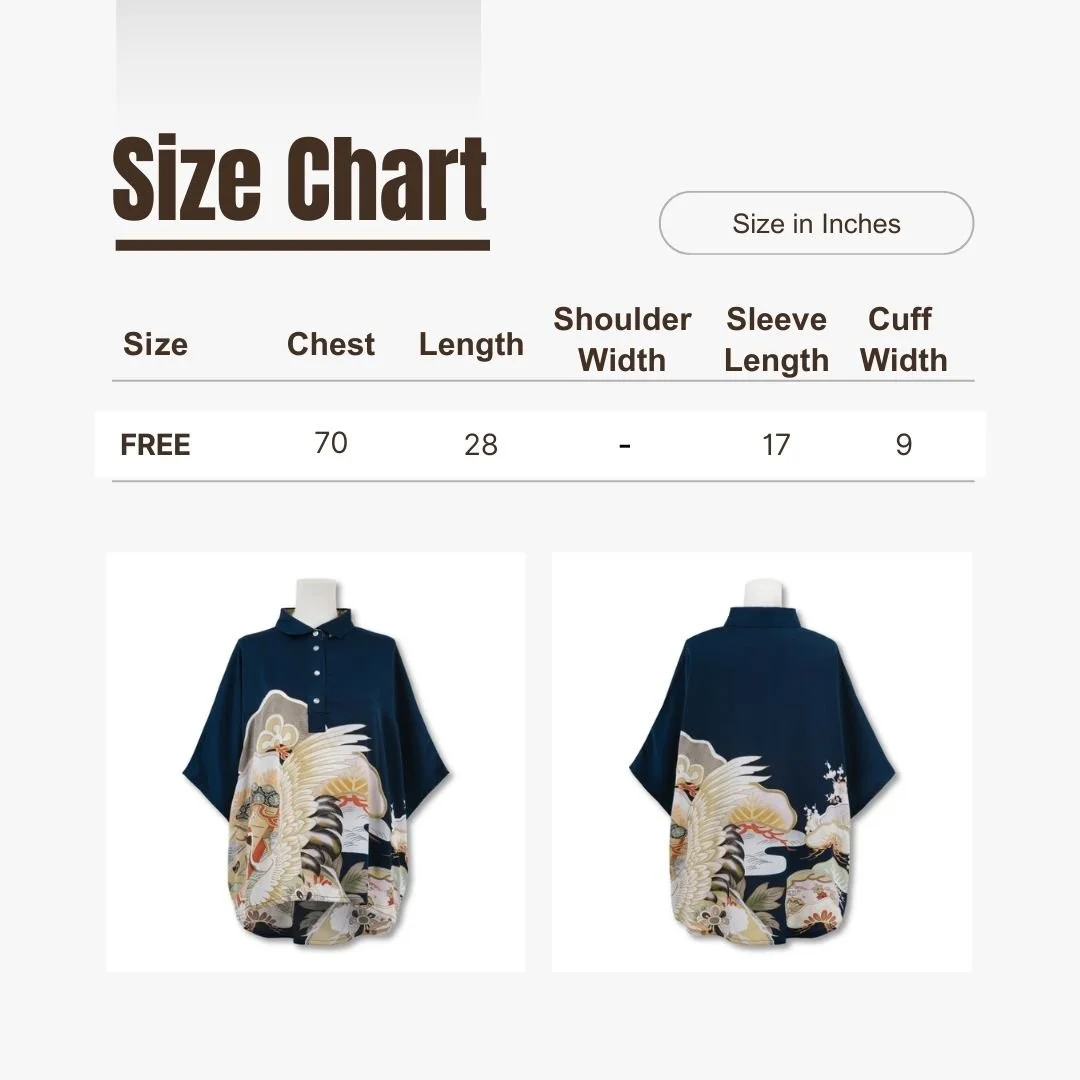
・100% Polyurethane
・Made in Japan
・Dry-clean
・Use pressing cloth to iron
・Model (5 feet, 3 inches)
・Currency : US Dollar (USD)
Color/ Blue and Beige Care Instruction
Japanese name / 玉蜀黍(Toumorokoshi)
-About-
Rooted in the earth and growing straight in the sun, corn is depicted as a symbol of harvest and life. Its neat rows of golden grains evoke the order and abundance of nature, each one seemingly conveying the breath of the earth. The supple curves of the leaves rustling in the breeze and the soft flow of the stalks enveloping the kernels evoke both the strength and gentleness of life, quietly speaking to the beauty of nature's woven forms. Corn was introduced to Japan during the Edo period, initially attracting people's attention as a rare imported crop. Its simple yet powerful appearance eventually blended with the Japanese climate, and by the Meiji and Taisho periods, it was incorporated into textiles and decorative designs as a new natural motif. Though a plant from a foreign land, its shape evokes a sense of nostalgia, and it became a beloved symbol of harvest alongside rice and wheat. Designers discovered a modern sense of beauty in the unique shape, arrangement of grains, and overlapping leaves. They went beyond the realism of nature to project the power of life within abstract rhythms and compositions. Corn depicted as a pattern on kimonos and obi is not simply a plant, but is expressed as a new natural beauty that embodies the spirit of the times and the hopes of the people. This pattern is imbued with joy for the fruitful season and a deep respect for nature. Born from the earth, illuminated by the sun, and eventually bearing fruit, it is also a symbol of the cycle and connection of life. This pattern exudes a sense of undeniable power and warmth in its quiet presence, gently conveying the beauty of humans and nature living together. It is a pattern that makes you feel that nature is at its most artistic.
・100% Polyurethane
・Made in Japan
・Dry-clean
・Use pressing cloth to iron
・Model (5 feet, 3 inches)
・Currency : US Dollar (USD)

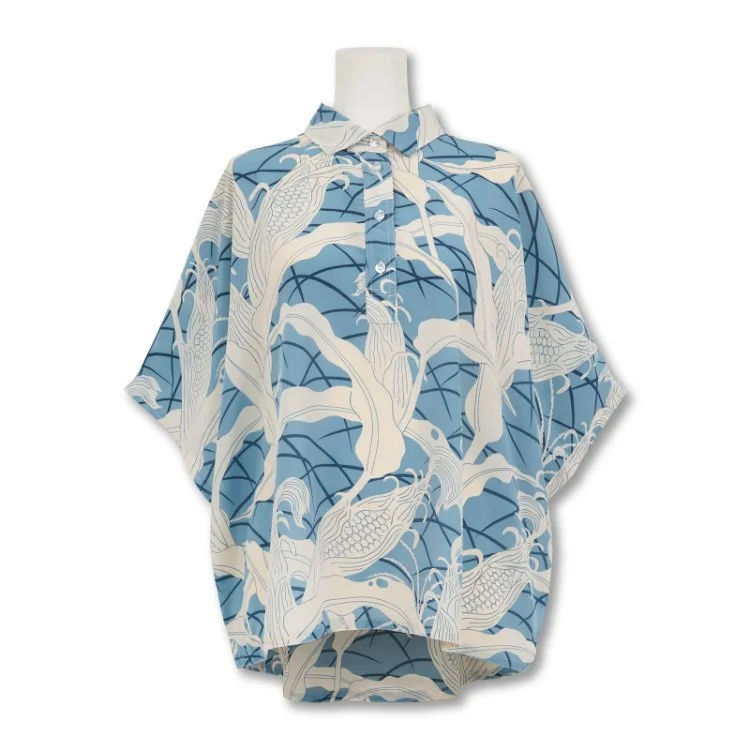 Image 1 of 7
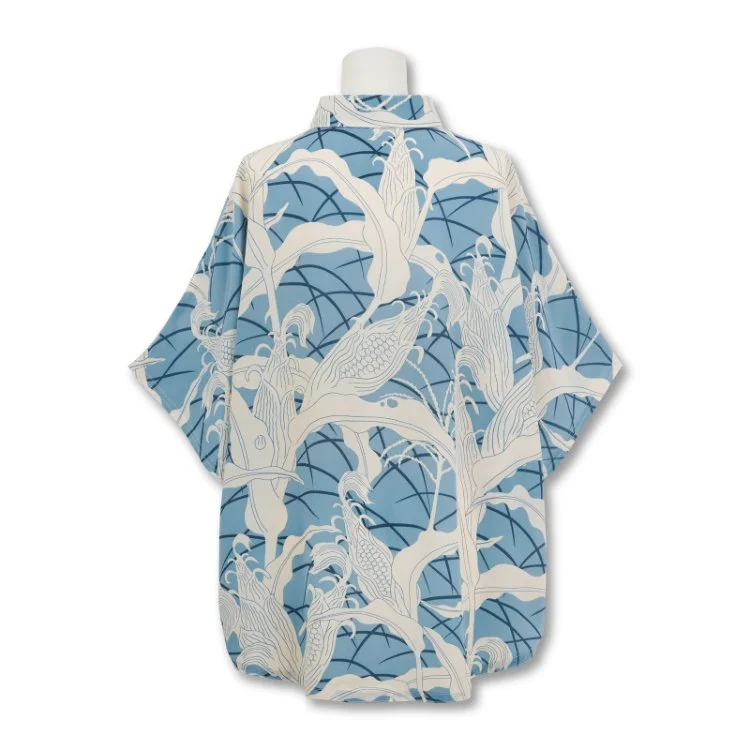 Image 2 of 7
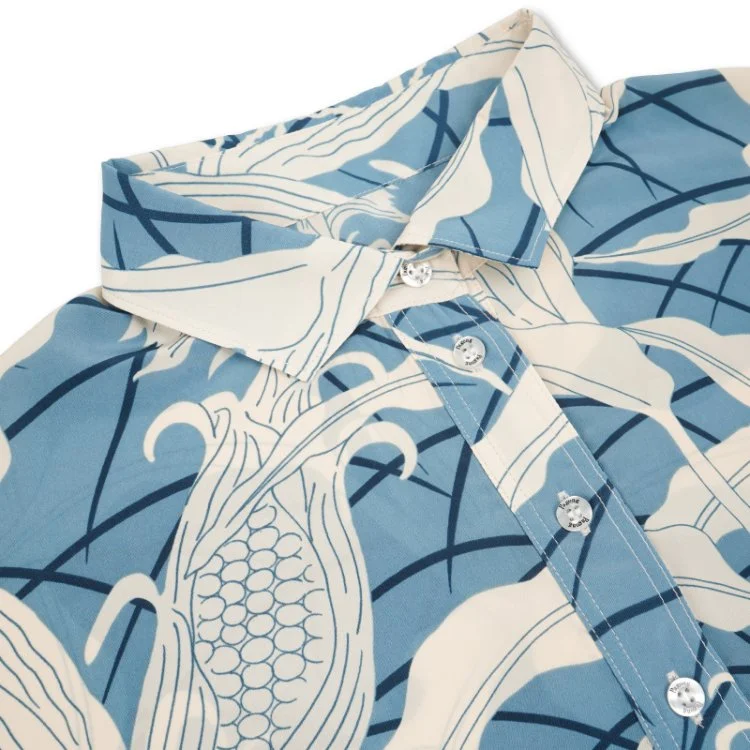 Image 3 of 7
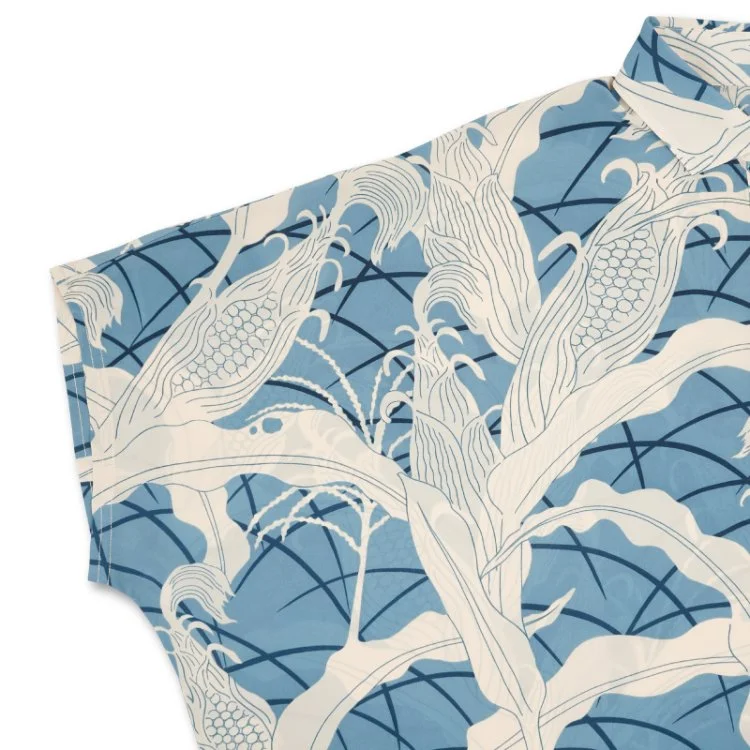 Image 4 of 7
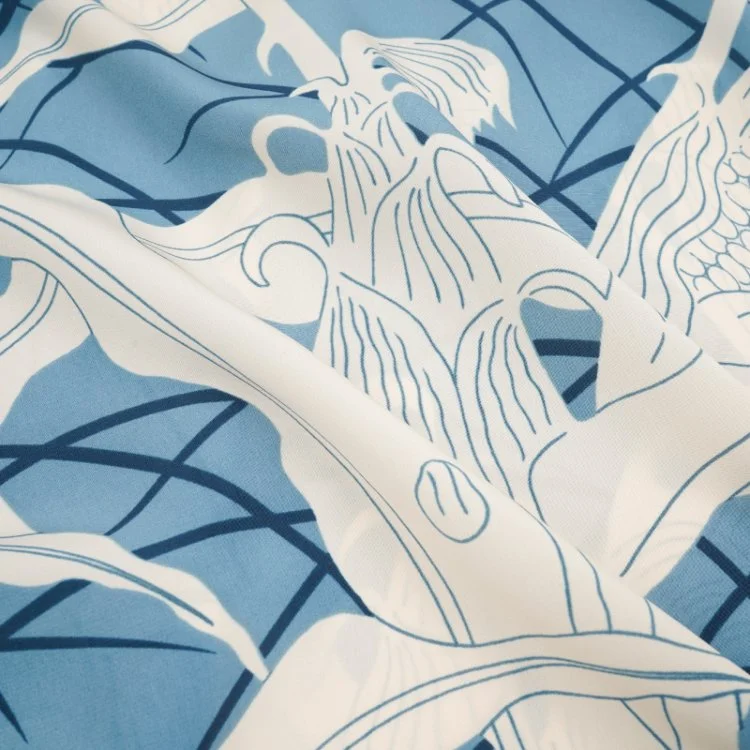 Image 5 of 7
 Image 6 of 7
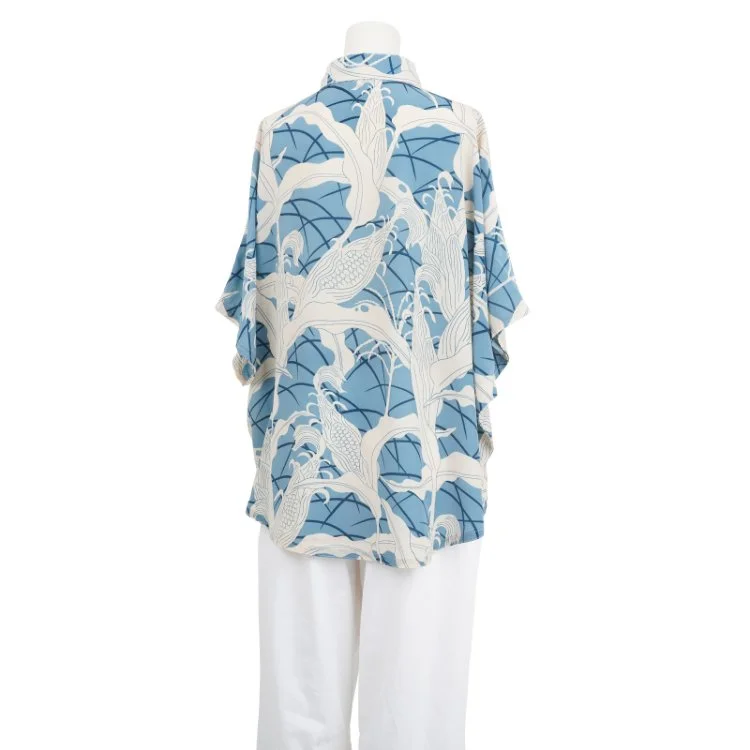 Image 7 of 7