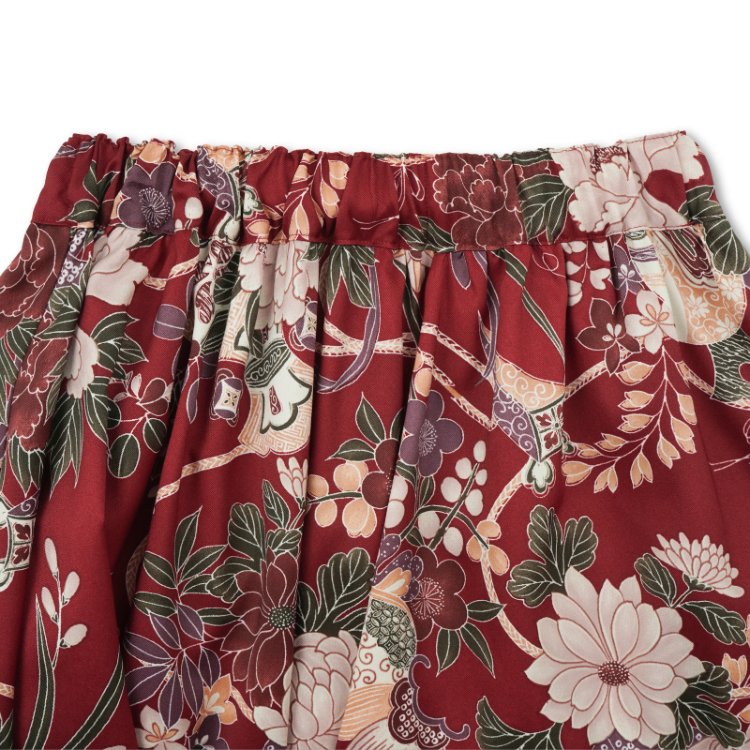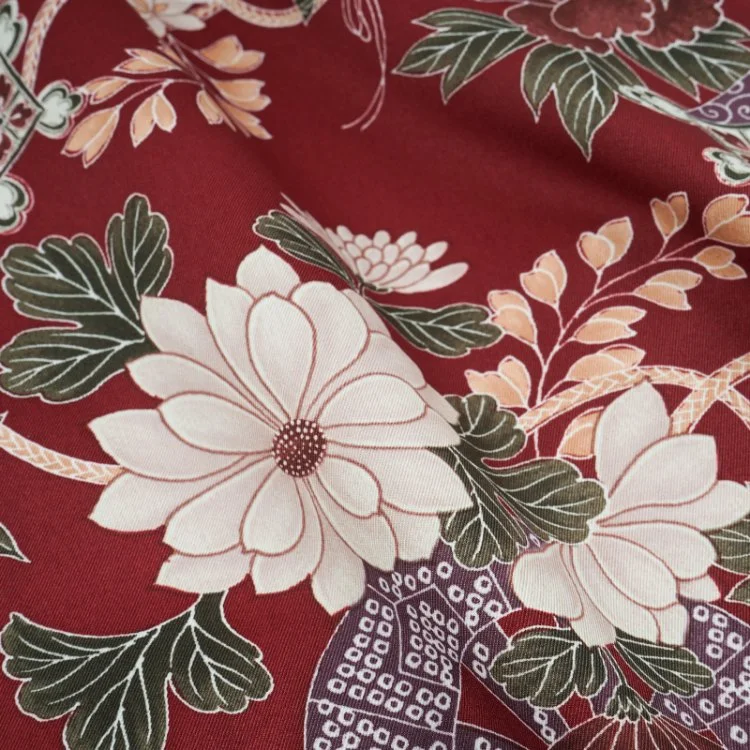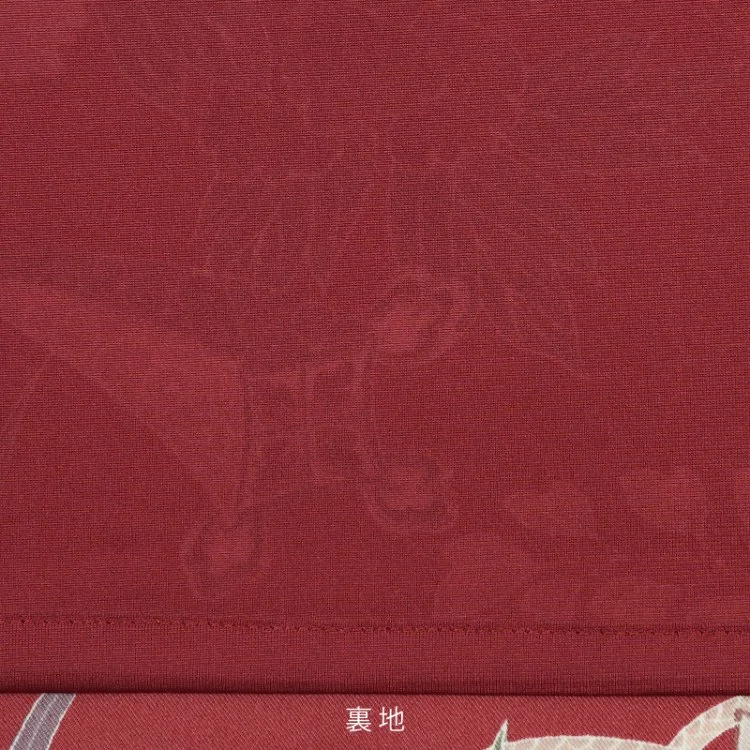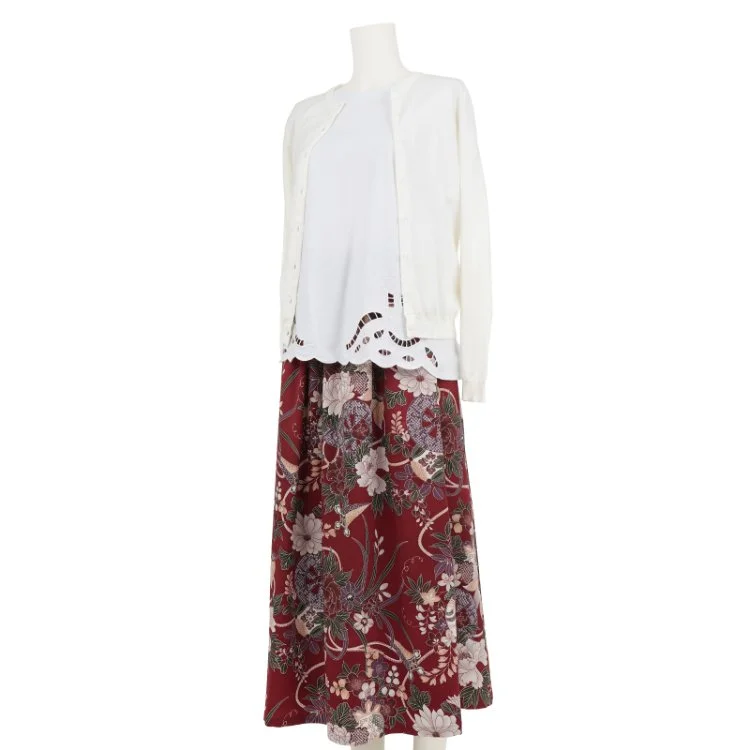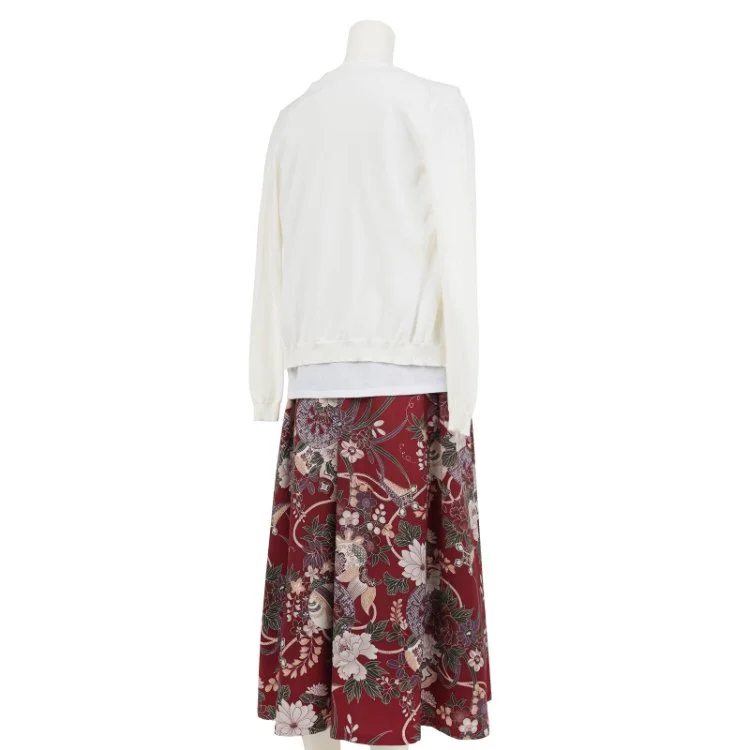
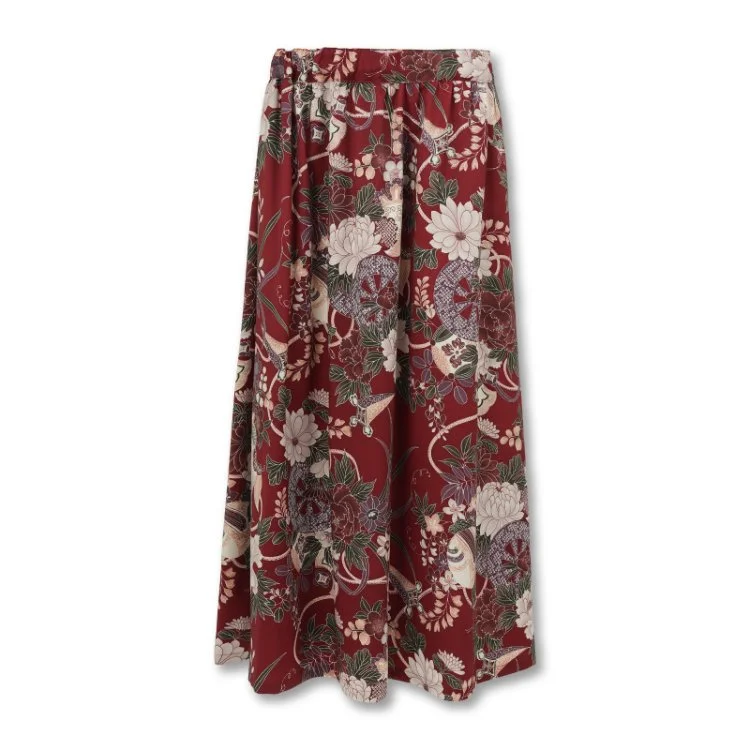
"Imperial cart filled with Seasonal Flowers " Long Skirt

$200.00

Color / Red and Multi-color Care Instruction

Japanese name/ <花車> HANAGURUMA

-About-
Most traditional Japanese patterns found on kimono date back to the
7th and 8th centuries and are inspired by nature, of which symbolism with a hidden meaning is very strong within the Japanese culture.

The “
Hanaguruma” pattern is meant to represent small carts, “guruma” filled with seasonal flowers or “hana”. These carts were only used by the imperial family and nobility living in and around the imperial palace in Kyoto.

The “
botan”, or peony is a flower of protection since its scent is said to ward off evil. The “kiku” or chrysanthemum is a symbol for the emperor and appears on the Japanese imperial seal.

When represented together, these flowers symbolize a future destined to be blessed with
longevity, vitality, and zest for living.

・100% Polyester
・Made in Japan
・Hand-wash
・Hang to dry
・Use pressing cloth to iron
・Currency : US Dollar (USD)

Color / Red and Multi-color Care Instruction

Japanese name/ <花車> HANAGURUMA

-About-
Most traditional Japanese patterns found on kimono date back to the
7th and 8th centuries and are inspired by nature, of which symbolism with a hidden meaning is very strong within the Japanese culture.

The “
Hanaguruma” pattern is meant to represent small carts, “guruma” filled with seasonal flowers or “hana”. These carts were only used by the imperial family and nobility living in and around the imperial palace in Kyoto.

The “
botan”, or peony is a flower of protection since its scent is said to ward off evil. The “kiku” or chrysanthemum is a symbol for the emperor and appears on the Japanese imperial seal.

When represented together, these flowers symbolize a future destined to be blessed with
longevity, vitality, and zest for living.

・100% Polyester
・Made in Japan
・Hand-wash
・Hang to dry
・Use pressing cloth to iron
・Currency : US Dollar (USD)

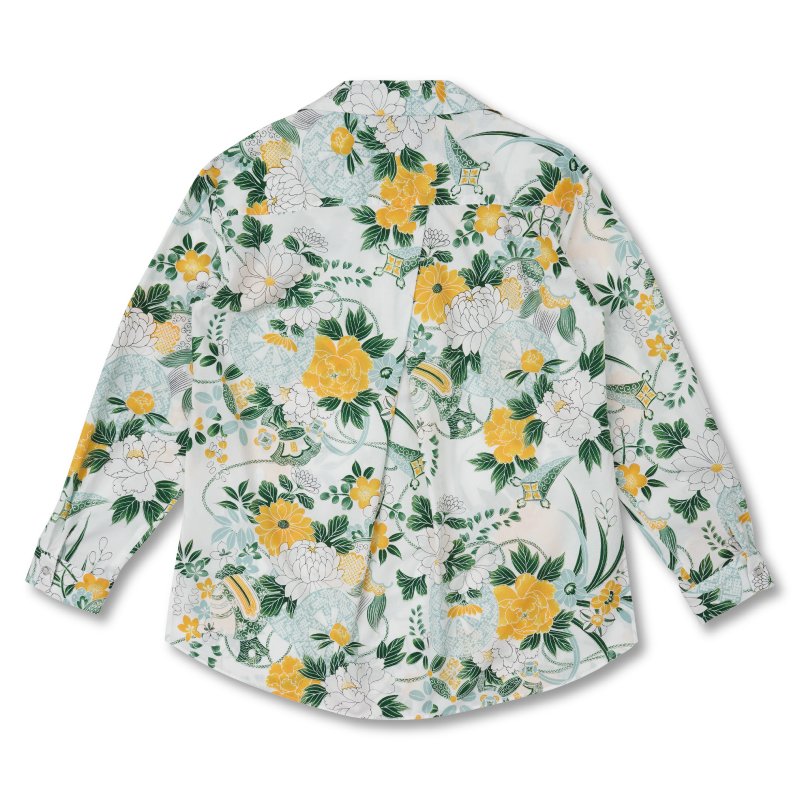
HANAGURUMA SKIPPER SHIRT HANAGURUMA SKIPPER SHIRT HANAGURUMA SKIPPER SHIRT
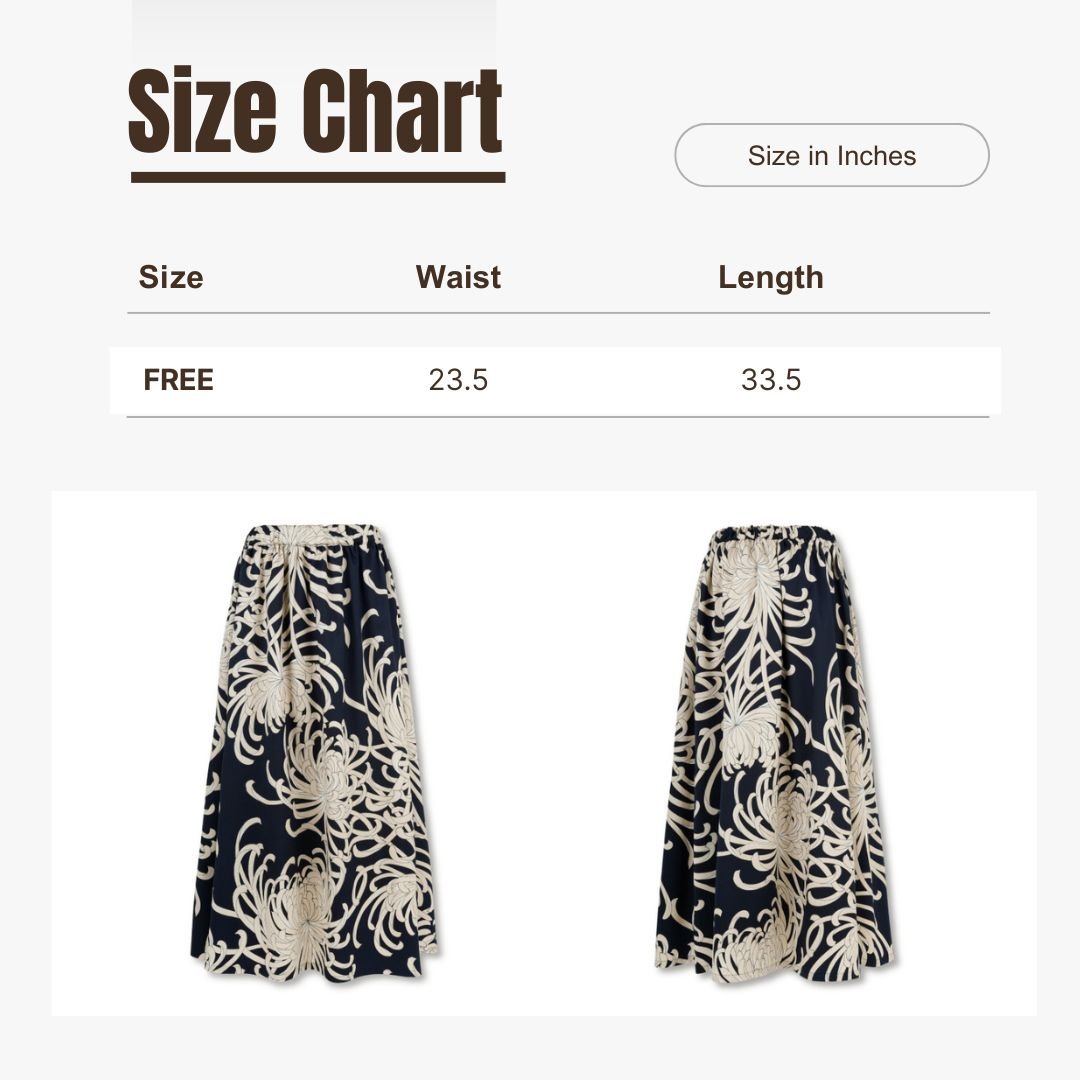
Size: